

Difficulties Show What Men Are.
"It is difficulties that show what men are."
— Epictetus, Discourses, 1.24
1. Meaning of the Quote
The character of a person is not fully revealed when life is comfortable, circumstances are favorable, and everything proceeds according to plan. It is when difficulties arise that our deeper qualities become visible. Adversity tests our patience, courage, judgment, integrity, and ability to remain faithful to our principles when doing so becomes uncomfortable or costly. In this sense, difficulties do not merely interrupt our lives; they reveal something about the people we are.
Epictetus invites us to look beyond appearances and examine how people respond when confronted with uncertainty, disappointment, loss, or hardship. Someone may speak confidently about courage, patience, and wisdom while life is easy. But when faced with failure, criticism, financial hardship, or an unexpected setback, that person's response reveals whether these qualities have become part of their character or remain merely ideals they admire.
The central message is that character is demonstrated through conduct, especially when circumstances make it difficult to act well. Patience becomes meaningful when we have reasons to become impatient. Courage becomes visible when we have something to fear. Integrity is tested when dishonesty would offer an advantage, and self-control matters most when our emotions urge us to react impulsively.
What Does The Quote Suggest?
For Epictetus, however, the purpose of recognizing this truth is not simply to judge other people. It is to examine ourselves. Difficulties give us an opportunity to discover where our principles are strong, where our weaknesses remain, and what we still need to develop. An unexpected setback can expose our dependence on approval, our fear of losing control, or our tendency to blame others. Such discoveries may be uncomfortable, but they can become the starting point of genuine personal growth.
The quote also suggests that we should not confuse a person's circumstances with the quality of their character. Experiencing hardship does not automatically make someone virtuous, just as enjoying prosperity does not make someone morally deficient. What matters is how a person responds to what happens. Two people may face the same disappointment, yet one responds with bitterness and dishonesty while the other responds with patience, courage, and a willingness to learn.
This distinction is essential to understanding the Stoic perspective. We cannot always determine which difficulties enter our lives, but we can work to govern our judgments, decisions, and actions. A difficult situation may expose a weakness, but it can also provide the occasion to strengthen it. The challenge is not to avoid every test of character, but to meet life's tests with greater wisdom and self-command.
Ultimately, Epictetus reminds us that we discover the depth of our character not simply through what we say we believe, but through what we choose to do when living by those beliefs becomes difficult.
2. About the Author — Epictetus
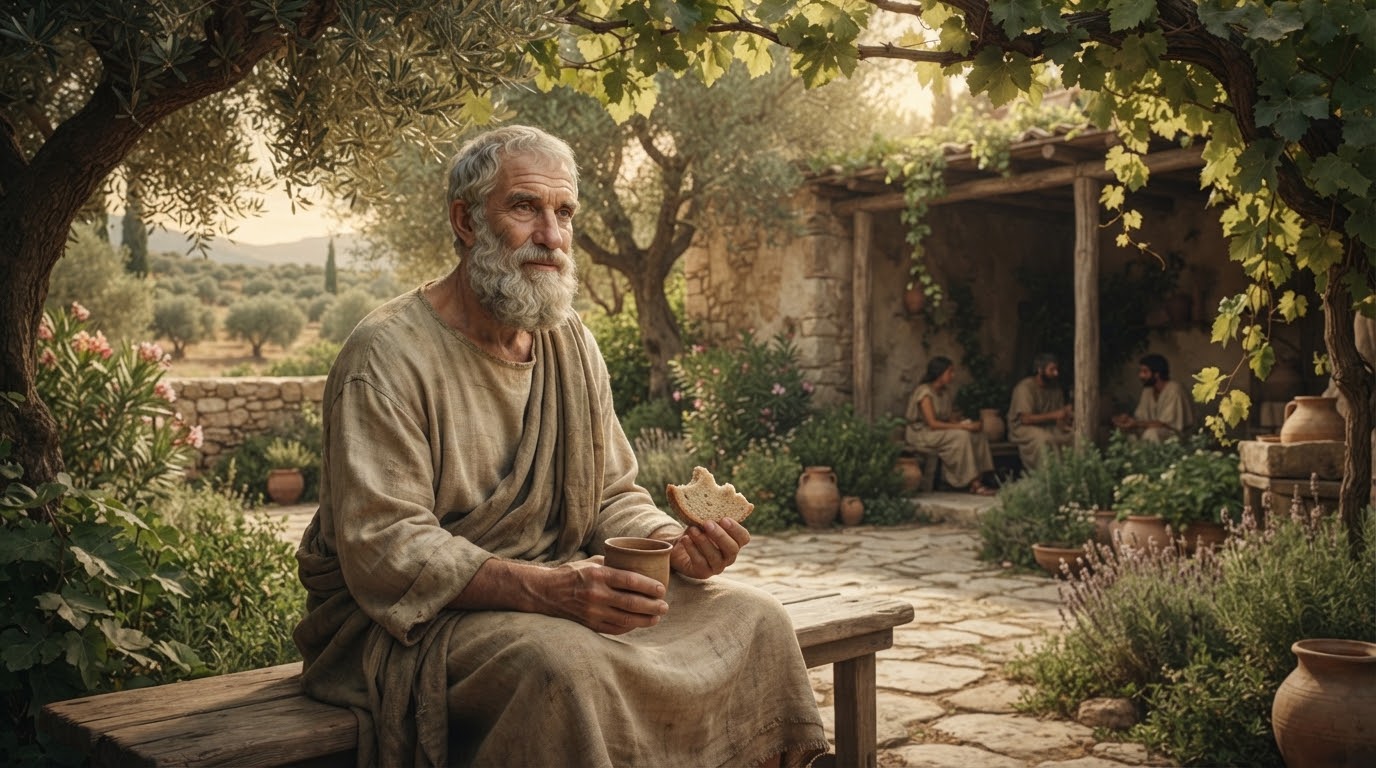
Epictetus (c. 50–135 CE) was a Greek Stoic philosopher whose teachings emphasized personal responsibility, rational judgment, moral freedom, and the distinction between what lies within our control and what does not. Born into slavery in the Roman Empire, he later gained his freedom and became a teacher of philosophy.
Epictetus taught that a good life depends less on external success than on the quality of our judgments and the choices we make. Wealth, reputation, social position, and physical comfort can change through circumstances beyond our control. By contrast, our efforts to act wisely, exercise self-discipline, and respond thoughtfully to events are central to the ethical life he advocated.
After Emperor Domitian expelled philosophers from Rome and Italy around 93 CE, Epictetus established a philosophical school at Nicopolis, in northwestern Greece. His teachings were recorded by his student Arrian, principally in the Discourses and the Enchiridion, or Handbook. These works preserve his practical approach to philosophy, which treated it not merely as an intellectual subject but as a discipline to be practiced in everyday life.
For Epictetus, philosophy meant learning how to live well under real conditions, including conditions we would never have chosen. His emphasis on adversity follows naturally from this approach: difficult experiences reveal whether we have learned to govern our reactions, distinguish what matters from what does not, and act according to our principles.
His teaching remains relevant because it directs attention away from the impossible task of controlling every external event and toward the more demanding work of developing sound judgment and dependable character.
3. Historical Context and Culture
Epictetus taught during the Roman Empire, when social status, wealth, political influence, and public reputation could strongly shape a person's life. Political instability, exile, illness, poverty, and the loss of favor were real possibilities. For people living under such conditions, the question of how to preserve inner freedom amid external uncertainty was not merely theoretical.
Stoicism, the philosophical tradition to which Epictetus belonged, had developed in ancient Greece and become influential in Rome. It taught that human flourishing depends on virtue and the exercise of reason rather than on the possession of wealth, power, pleasure, or prestige. Stoics did not necessarily regard health, security, and material comfort as undesirable; rather, they argued that these things should not determine whether a person lives well.
The quotation comes from Book 1, Chapter 24 of the Discourses, a chapter concerned with how people should struggle against difficulties. Epictetus develops his argument through the image of an athlete preparing for competition. A wrestler does not become stronger by avoiding every opponent. Training requires resistance, exertion, and the willingness to confront challenges that reveal weaknesses and develop skill.
Examining Their Fears
He extends this image by comparing a person facing adversity to a scout sent to investigate dangerous territory. A frightened scout may interpret every noise or shadow as evidence of an approaching enemy. A well-prepared scout observes carefully and reports what is actually there. In the same way, Epictetus encourages people to examine their fears rather than automatically accepting them as proof that a situation is unbearable.
The chapter also challenges the assumption that wealth and public standing guarantee happiness. External advantages cannot eliminate the possibility of suffering, loss, or humiliation. Epictetus argues that a person's freedom depends significantly on their relationship to these circumstances and on whether they allow external events to dictate their judgments and actions.
In this context, the quotation is not simply a celebration of toughness. It expresses a fundamental Stoic principle: the trials of life provide opportunities to practice virtue and discover whether philosophical convictions can withstand the pressures of reality.
4. Relevance Today
The wisdom of this quotation extends far beyond the ancient world. Although the challenges of modern life differ from those of Epictetus's time, people continue to face failure, uncertainty, disappointment, conflict, and circumstances they cannot fully control. These experiences reveal how well we manage our emotions, whether we take responsibility for our decisions, and how consistently we uphold our values when under pressure.
In personal relationships, difficulties reveal the quality of our patience, empathy, and respect. It is relatively easy to be kind when everyone agrees with us. The deeper test comes when we feel misunderstood, disappointed, or unfairly treated. Our response in those moments can strengthen trust or damage it.
In professional life, setbacks reveal our willingness to learn and adapt. A rejected proposal, a failed project, or criticism of our work can provoke defensiveness and blame. Alternatively, it can encourage honest reflection, perseverance, and improvement. The difficulty itself does not determine the outcome; our response helps shape what we learn from it.
In moments of uncertainty, the quotation reminds us to distinguish between what is happening and what we fear might happen. A challenging situation can make every possibility appear threatening. By slowing down, examining the facts, and responding deliberately, we can avoid allowing fear to dictate our choices.
In the pursuit of personal growth, adversity can reveal the distance between the person we believe ourselves to be and the person our actions demonstrate. We may consider ourselves patient until we are forced to wait, generous until generosity becomes inconvenient, or courageous until we must risk disapproval. Recognizing this gap is not a reason for self-condemnation. It is an opportunity to practice the qualities we wish to embody.
Leadership
The quotation is also relevant to leadership. A leader's character becomes particularly visible when decisions are unpopular, resources are limited, or a mistake must be acknowledged. Difficult circumstances can reveal whether a person accepts responsibility, treats others fairly, and remains committed to sound principles.
Yet this teaching requires an important qualification. Suffering is not automatically ennobling, and people should not be judged harshly for struggling under difficult conditions. Trauma, exhaustion, illness, poverty, and overwhelming responsibilities can affect how anyone responds. Resilience is not the absence of distress, nor does courage require refusing help. Sometimes a wise response means seeking support, establishing boundaries, or leaving a harmful situation.
Read in this balanced way, Epictetus's words offer a practical invitation: when difficulties arise, pay attention to what they reveal, learn from what you discover, and use that knowledge to become more deliberate in your choices.
5. Summary — The Wisdom in a Few Words
Epictetus teaches that difficult circumstances reveal the qualities that lie beneath our outward appearance. When life is comfortable, our patience, courage, integrity, and self-control may remain largely untested. When challenges arise, our responses make those qualities—or their absence—more visible.
The purpose of this insight is not to condemn ourselves or others, but to recognize where growth is needed. Difficulties can become opportunities to practice virtue, strengthen judgment, and align our actions with our values.
We cannot always choose the situations we encounter, but we can work to choose how we meet them. The real measure of character is not a life without hardship, but the effort to respond to hardship with wisdom, courage, and integrity.
The enduring lesson: Difficulties reveal who we are today and give us an opportunity to work on who we may become tomorrow.
Explore Similar Quotes
Browse the Author Collection
Practicing the Wisdom of the Quote
Turning Adversity into Character
A practical guide to applying Epictetus's teaching in everyday life.
Understanding the wisdom of a philosophical quote is only the beginning. Its real value emerges when we apply it to the situations that test our patience, challenge our confidence, and demand difficult choices. Epictetus invites us to treat these moments as opportunities for self-examination and deliberate practice.
The goal is not to seek hardship or pretend that painful experiences are pleasant. It is to develop the ability to respond to unavoidable difficulties in ways that reflect our values rather than our immediate fears or impulses.
Practice 1. Pause Before You React
When a difficult situation arises, our first response may be anger, anxiety, frustration, or the urge to blame someone. These reactions are human, but acting on them immediately can make a difficult situation worse.
Practice creating a small space between what happens and what you do next. Take a breath, identify what you are feeling, and give yourself time to consider your options. The pause allows reason to participate before emotion determines your behavior.
Try this: The next time someone criticizes you, resist the urge to defend yourself immediately. Listen, consider whether any part of the criticism is justified, and respond only after you have thought it through.
Practice 2. Distinguish What You Can Control
A central principle of Stoicism is the distinction between what depends on us and what does not. We cannot always control other people's decisions, unexpected events, the past, or the final outcome of our efforts. We can, however, work on our judgments, intentions, choices, and actions.
When facing a problem, direct your energy toward the part you can influence. This does not mean passively accepting injustice or refusing to change unfavorable circumstances. It means recognizing the limits of your control so that you can act effectively within them.
Try this: Write down the difficulty you are facing. Divide a page into two columns: “Within My Influence” and “Outside My Control.” Identify one constructive action you can take today.
Practice 3. Use Difficulties to Examine Your Character
Challenges can expose patterns we might otherwise overlook. Perhaps you become impatient when plans change, withdraw when you fear rejection, or become defensive when someone questions your judgment. These reactions provide useful information about the habits you need to strengthen.
Examine these patterns without turning the exercise into self-criticism. The purpose is not to label yourself as weak or inadequate. It is to recognize a behavior clearly enough to begin changing it.
Try this: At the end of a difficult day, ask yourself: “What did this situation reveal about me? What did I handle well? What would I like to do differently next time?”
Practice 4. Train Your Character Through Small Challenges
Epictetus's comparison between adversity and athletic training suggests that character develops through practice. Just as an athlete strengthens a skill through repeated effort, we can cultivate patience, courage, and self-discipline through ordinary decisions.
You do not need to wait for a major crisis to begin. Everyday inconveniences provide opportunities to practice remaining calm, keeping a promise, admitting a mistake, or completing a necessary task when motivation is low.
Try this: Choose one quality you want to strengthen this week. If it is patience, practice listening without interrupting. If it is courage, address a conversation you have been avoiding. If it is discipline, complete a meaningful task even when you would rather postpone it.
Practice 5. Respond to Setbacks with Learning
A setback can become a source of growth when we examine it honestly. This does not mean every failure contains a hidden benefit or that every painful event can be prevented from happening again. It means looking for whatever useful understanding or adjustment remains possible.
Instead of asking only, “Why did this happen to me?” ask, “What can I learn from this, and what is the most constructive step available now?” This shifts attention from helpless rumination toward reflection and action.
Try this: After a disappointing outcome, identify one factor you could influence, one lesson worth retaining, and one practical change you can make in your next attempt.
Practice 6. Measure Yourself by Your Values, Not by Appearances
External approval can make us feel successful, while criticism can make us question our worth. Epictetus reminds us that reputation and circumstances are not reliable measures of moral character.
Rather than concentrating exclusively on how others perceive you, consider whether your actions reflect the values you claim to hold. Have you been honest? Have you treated others fairly? Have you taken responsibility for your decisions?
Try this: Before making a difficult choice, ask, “What would I consider the right action if nobody praised me for it or knew I had done it?”
Practice 7. Recognize When Strength Means Seeking Help
Resilience is sometimes misunderstood as the obligation to endure everything alone. But good judgment includes recognizing when a challenge exceeds our present resources, when we need advice, and when circumstances are harmful.
Asking for help can be an expression of courage and responsibility. So can resting, accepting support, or stepping away from a situation that cannot be made safe or healthy.
Try this: Identify one difficulty you have been carrying alone. Consider whether a trusted friend, family member, professional, or other appropriate source of support could help you address it.
A Daily Reflection Inspired by Epictetus
The Character Check-In
Use these questions at the end of the day, especially after a challenging experience.
- What difficulty tested me today?
- What did my response reveal about my character?
- Did I act according to my values?
- What was within my control?
- What will I try to do differently next time?
The Deeper Practice
The purpose of practicing this wisdom is not to become invulnerable to life's difficulties. It is to become more conscious of our responses and more consistent in the principles that guide our actions.
Every challenge presents a question: Will we allow fear, anger, or disappointment to determine our conduct, or will we make an effort to respond with greater clarity and self-command?
We will not always respond perfectly. What matters is the willingness to learn, correct our mistakes, and return to the work of developing our character.
A practical reminder: You may not choose every challenge you face, but you can use each experience to practice becoming the person you want to be.
Poetry & Lyrics Inspired by the Quote
An original poem inspired by the philosophy of Epictetus
The Test of Who We Are
When skies are clear, the heart seems strong,
And every road appears to lead along
A path where little asks of us,
Where hope is easy, faith is just.
But let the winds rise from the deep,
And stir the doubts we thought asleep.
Let plans collapse and certainties depart,
And trials knock upon the guarded heart.
Then patience finds its quiet test,
And courage rises from the breast.
Integrity, no longer dressed in words,
Must speak through deeds when truth is hard.
For who we are is not the claim we make,
Nor promises we easily undertake.
It is the choice we make when fear draws near,
The truth we speak when lies appear.
It is the hand we offer in distress,
The grace we show when faced with less,
The strength to stand, the will to bend,
The wisdom to begin again.
No hardship comes with virtue guaranteed,
No wound alone can plant a noble seed.
Yet what we choose when life is hard
Can shape the soul and leave its mark.
So let the difficult days reveal
What time and comfort sometimes conceal.
Not who we were when life was kind,
But what we choose when tested in mind.
And if we stumble, let us rise,
With clearer hearts and wiser eyes.
For every trial we meet with care
May teach us who we are, and who we dare
To become, through every test we bear.
———————
A Final Reflection
Epictetus asks us to look at difficulties differently. Rather than seeing them only as interruptions to the life we want, we can also recognize them as moments that reveal our habits, test our principles, and invite us to grow.
We do not need to welcome pain, romanticize suffering, or pretend that every hardship has a purpose. We need only recognize that, when difficulties cannot be avoided, our response still matters. We can meet them with honesty, seek help when necessary, learn from our mistakes, and continue working toward a life guided by wisdom and integrity.
The measure of character is not perfection under pressure. It is the continuing effort to act well, even when doing so is difficult.
When life tests you, let the experience reveal not only where you stand, but also where you can grow.