
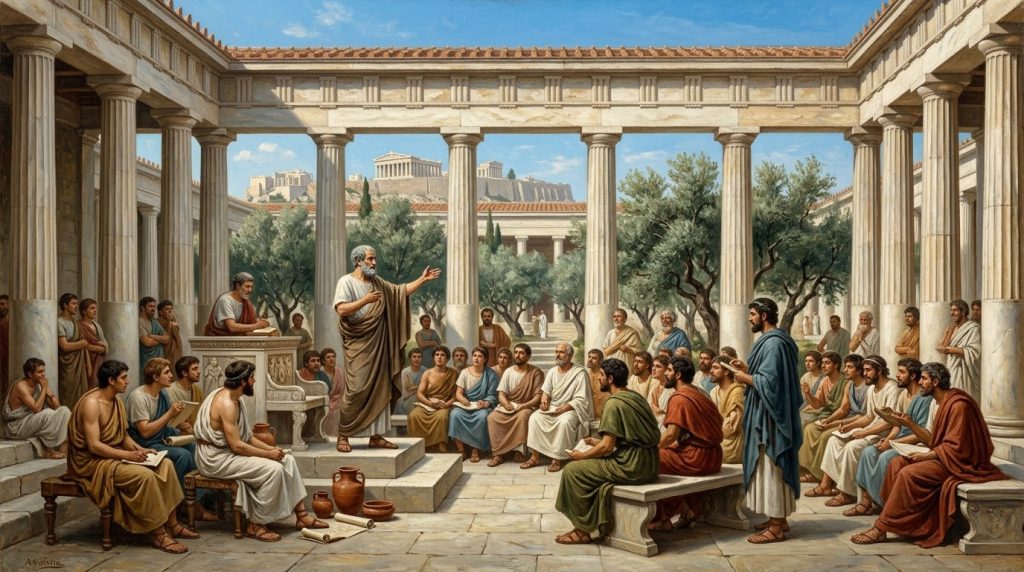
Aristotle Biography | Ancient Greek Philosopher
"Happiness depends upon ourselves." — Aristotle
Overview & Quick Summary
Aristotle was an Ancient Greek philosopher and polymath whose work shaped Western thought for over two millennia. A student of Plato and tutor to Alexander the Great, he pioneered systematic observation across logic, ethics, biology, and political theory. Unlike his teacher Plato, who focused on ideal, abstract forms, Aristotle grounded his philosophy in empirical reality, earning him the reputation as the father of modern science and practical philosophy.
Key Life Events & Context
Born in Stagira in northern Greece, Aristotle moved to Athens at age 17 to study at Plato’s Academy, remaining there for nearly twenty years. After Plato's death, he traveled across Greece and served as the personal tutor to a young Alexander the Great. Upon returning to Athens, Aristotle founded his own school, the Lyceum, where he and his followers came to be known as the "Peripatetics" (those who walk about), reflecting his habit of lecturing while pacing the school's covered walkways.
Core Philosophy & Major Themes
Virtue Ethics & Eudaimonia: Aristotle argued that the ultimate human goal is Eudaimonia (flourishing or living well). True happiness is not mere pleasure or chance, but a lifelong practice of cultivating moral virtues.
The Golden Mean: Moral character lies in finding the balance between extremes of deficiency and excess. For example, courage is the ideal middle ground between cowardice (deficiency) and rashness (excess).
Practical Wisdom (Phronesis): Philosophy shouldn't just be intellectual theory; it must guide daily choices, actions, and habits.
Why His Wisdom Still Matters Today
Aristotle’s reflections on choice, personal agency, character formation, and intentional living remain remarkably modern. His insistence that happiness is an active habit rather than a random occurrence provides actionable wisdom for anyone seeking self-mastery, emotional clarity, and meaningful living.
384 BC – 322 BC, Ancient Greece, Classical Antiquity, Greek