
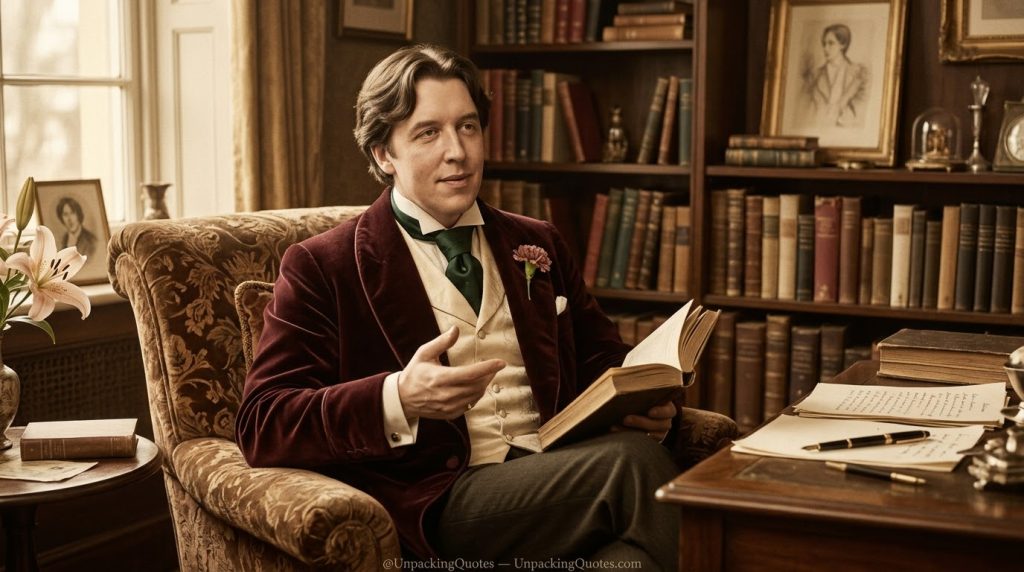
Oscar Wilde Biography & Works | Author Profile
"To live is the rarest thing in the world. Most people exist, that is all." — Oscar Wilde
Overview & Quick Summary
Oscar Wilde was an Irish poet, playwright, and novelist who became one of the most celebrated literary figures and public intellectuals of late Victorian London. Renowned for his biting wit, flamboyant personal style, and sharp social satire, Wilde stood as a leading champion of the Aesthetic Movement, which promoted "art for art's sake". His brilliant literary career reached its height with acclaimed theatrical comedies and his landmark gothic novel, before a tragic legal trial led to his imprisonment and early death.
Key Life Events & Context
Born in Dublin to prominent intellectual parents—his father an eminent eye surgeon and his mother a nationalist poet—Wilde excelled academically at Trinity College Dublin and Magdalen College, Oxford. After completing his studies, he established himself in London society and embarked on a successful 1882 lecture tour across North America, advocating for aesthetic design and art. In the early 1890s, Wilde achieved immense success on the London stage with satirical masterpieces like The Importance of Being Earnest. However, at the peak of his fame in 1895, a feud with the Marquess of Queensberry led to Wilde's prosecution and conviction under harsh Victorian laws regarding sexuality. Sentenced to two years of hard labor, his health suffered severely; following his release, he lived in exile in France until his passing at age 46.
Core Philosophy & Major Themes
- Aestheticism ("Art for Art's Sake"): Wilde argued that art needs no moral, political, or educational justification; its primary value lies in beauty, form, and emotional resonance rather than utility.
- Masks & Social Hypocrisy: Through brilliantly crafted dialogue and paradox, Wilde exposed the rigid double standards, superficiality, and moral pretension of Victorian high society.
- The Consequences of Hedonism: In The Picture of Dorian Gray, Wilde explored the dark paradox of aesthetic devotion—showing how pursuing beauty and sensory pleasure without self-awareness can corrupt the human spirit.
Why His Wisdom Still Matters Today
Oscar Wilde remains an enduring icon of individuality, creative freedom, and social critique. His sharp epigrams and theatrical works continue to be performed globally, offering timeless humor, brilliant observation on human behavior, and a compelling defense of art's role in personal liberation.
NATIONALITY: Irish.
BIRTH-DEATH-DATE: October 16, 1854 – November 30, 1900.
ERA PERIOD: Late Victorian Era, Decadent & Aesthetic Movements.
MAIN DISCIPLINE: Cultural Criticism, Poetry, Playwriting, Novel Writing, Aesthetic Philosophy.
NOTABLE WORKS: The Picture of Dorian Gray (1890), The Importance of Being Earnest (1895), De Profundis (1905), The Ballad of Reading Gaol (1898), An Ideal Husband (1895)
Explore This Author’s Quotes
Click on any quote below to explore its Unpacking — discover its meaning, context, and relevance today.