
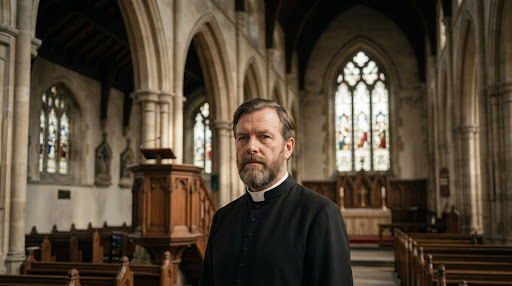
Phillips Brooks Biography & Life Summary
"Do not pray for easy lives. Pray to be stronger men. Do not pray for tasks equal to your powers. Pray for powers equal to your tasks."
— Phillips Brooks
Overview & Quick Summary
Phillips Brooks was an American Episcopal clergyman, author, and orator who became one of the most celebrated figures in late 19th-century American religious and intellectual life. Serving as the long-time rector of Trinity Church in Boston and briefly as Bishop of Massachusetts, Brooks was legendary for his magnetic preaching, humanitarian spirit, and expansive, hopeful philosophy of human potential. His 1886 collection Twenty Sermons showcased his mature worldview—combining spiritual insight, moral courage, and literary elegance.
Key Life Events & Context
Born in Boston, Massachusetts, Brooks graduated from Harvard University in 1855 before completing his theological studies at the Virginia Theological Seminary. After serving congregations in Philadelphia during the American Civil War—where he became a passionate abolitionist and national voice against slavery—he returned to Boston in 1869 to lead Trinity Church. Following an inspiring journey through the Holy Land in 1865, he penned the famous Christmas carol "O Little Town of Bethlehem." By 1886, Brooks stood at the height of his influence, delivering influential lectures at Harvard, Oxford, and Westminster Abbey before being consecrated Bishop of Massachusetts in 1891.
Core Philosophy & Major Themes
Truth Through Personality: Brooks famously defined preaching—and great moral communication—as "truth through personality," arguing that intellectual ideas gain living power only when embodied in authentic human character.
Essential Human Dignity: Opposing rigid cynicism, Brooks emphasized the inherent dignity, nobility, and untapped capacity for goodness within every individual.
Active Faith & Character Formation: True spirituality is not passive dogma, but an active, daily effort to cultivate empathy, integrity, and resilience in service to the surrounding community.
Why His Wisdom Still Matters Today
Phillips Brooks offers a timeless model for compassionate leadership, moral uplifting, and eloquent communication. His writings provide practical inspiration for leaders, public speakers, and thinkers seeking to motivate others through hope, personal authenticity, and principled action rather than fear or division.
NATIONALITY: American, USA.
BIRTH-DEATH-DATE: December 13, 1835 – January 23, 1893.
ERA PERIOD: 19th Century, Victorian Era, Gilded Age.
MAIN DISCIPLINE: Moral Philosophy, Christian Theology, Homiletics, Hymnody.
NOTABLE WORKS: Twenty Sermons (1886), Lectures on Preaching (1877), "O Little Town of Bethlehem" (1868)
BIRTH-DEATH-DATE: December 13, 1835 – January 23, 1893.
ERA PERIOD: 19th Century, Victorian Era, Gilded Age.
MAIN DISCIPLINE: Moral Philosophy, Christian Theology, Homiletics, Hymnody.
NOTABLE WORKS: Twenty Sermons (1886), Lectures on Preaching (1877), "O Little Town of Bethlehem" (1868)
Explore This Author’s Quotes
Click on any quote below to explore its Unpacking — discover its meaning, context, and relevance today.